If you have started discussing fertility treatments, then age must have been one of the first few things your fertility specialist must have talked to you about. Like many couples, you also must have felt that if you are healthy, age will not play a major role in your ability to conceive. While good health does matter, age has a direct impact on fertility in ways that are not always visible. Understanding how age influences fertility treatment can help you make informed, timely decisions without unnecessary fear or pressure.
How Age Affects Female Fertility and Fertility Treatment
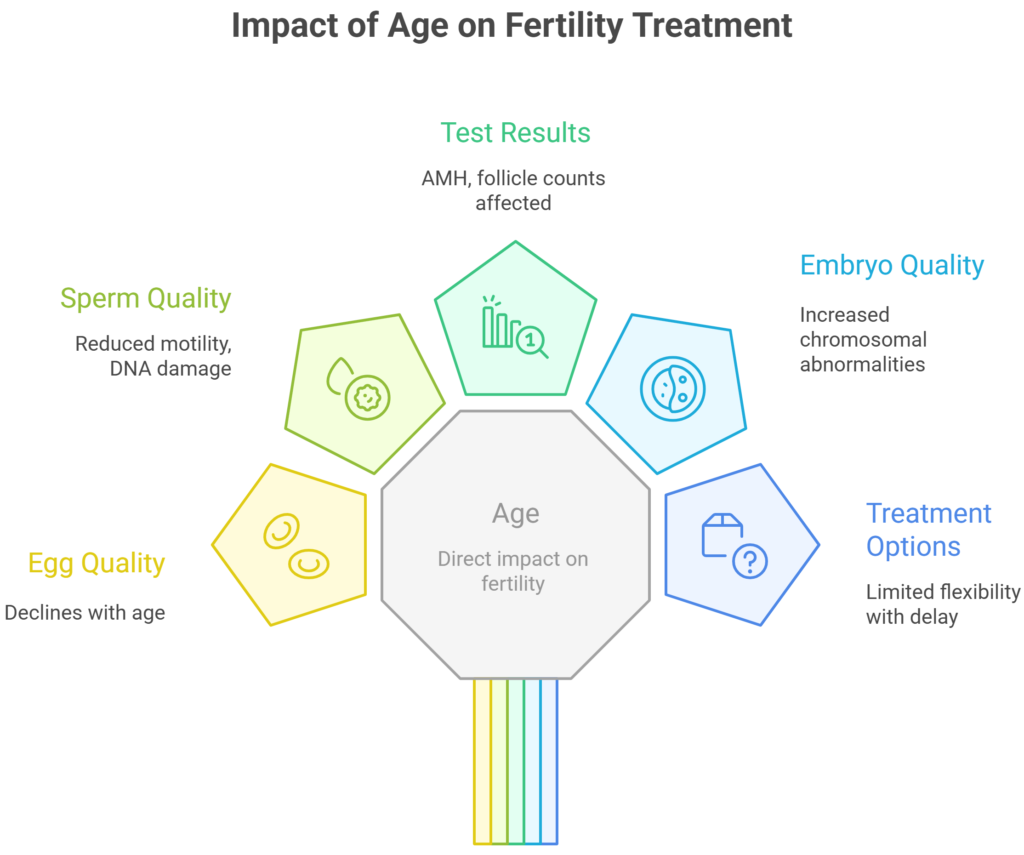
Women are born with a fixed number of eggs, and both the quantity and quality of these eggs naturally decline over time. In the early 20s, fertility is generally at its peak. From the early 30s, egg numbers begin to reduce gradually, and after 35, this decline becomes more noticeable. By the early 40s, both egg quality and availability can drop significantly. Research shows that female fertility starts to decline around the age of 32 and drops more sharply after the age of 37, largely due to changes in egg quality and quantity.
This does not mean pregnancy stops after a certain age, and many women conceive later in life. As egg quality declines, the chances of fertilisation, implantation, and a healthy pregnancy can be reduced. The risk of miscarriage also increases with age. These are natural biological changes and not a reflection of overall health or lifestyle.
How Age Affects Male Fertility
Fertility discussions often focus on women, but male age matters too. Although men continue to produce sperm throughout life, sperm quality can change with time. Factors such as reduced motility and higher DNA fragmentation become more common with age, especially after forty. Read more about the signs, causes, and treatment options for low sperm count here.
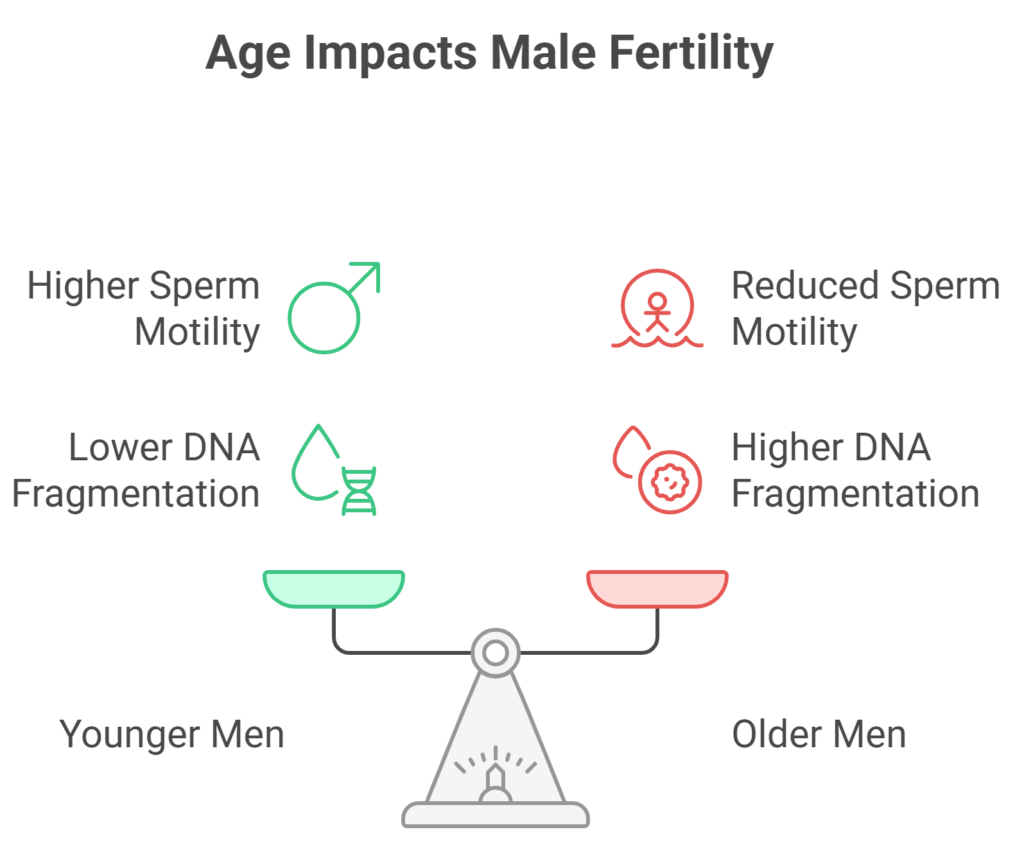
These changes may not always show up clearly in routine semen tests, but they can influence embryo development. That is why fertility specialists increasingly consider both partners’ ages rather than viewing fertility as a woman’s only issue.
How Age Affects Fertility Test Results
Fertility tests help doctors understand how the reproductive system is functioning at a given point in time. Tests like Anti-Müllerian Hormone (AMH) levels, ultrasound follicle counts, and hormone panels are all influenced by age.
A low AMH does not mean pregnancy is impossible, just as a normal result does not guarantee success. These tests help doctors choose the most suitable treatment approach and timeline, especially when age is a factor.
Why Age Influences Treatment Success
One reason age affects fertility treatment outcomes is embryo quality. Younger eggs are more likely to develop into embryos that implant successfully and continue into a healthy pregnancy. As age increases, the likelihood of embryos with chromosomal abnormalities also rises.
Delaying evaluation or treatment when fertility markers are already declining may limit certain options later. Early assessment gives doctors more flexibility in choosing the most suitable approach.
Fertility Treatment Options at Different Ages
There is no single treatment that fits everyone of a certain age. Younger women may respond well to simpler treatments, while women in their late 30s or early 40s may benefit from more advanced approaches. What matters is how age interacts with ovarian reserve, overall health, and previous treatment response.
A personalised approach ensures that treatment decisions are based on individual needs rather than assumptions. Two women of the same age may require very different treatment plans.
The Emotional Side of Age-Related Fertility Concerns
Age-related fertility discussions can be emotionally challenging. Many people experience guilt, anxiety, or regret, especially if they delayed trying to conceive for personal or professional reasons. These feelings are common and understandable.
It is important to remember that fertility journeys are deeply personal. Emotional support, clear communication with doctors, and realistic expectations can help reduce stress and make the process more manageable.
Why Early Evaluation Makes a Difference
Early fertility evaluation does not mean starting treatment immediately. Taking an early evaluation can help you plan, explore options, and make decisions without urgency or panic.
Age matters in fertility treatment because it shapes how the body responds, how treatments are planned, and how outcomes are interpreted. With the right guidance, many people achieve healthy pregnancies at different stages of life.
If you have questions about how age may affect your fertility, the specialists at London IVF Centre are here to guide you. A personalised consultation can help you understand your options and plan your next steps with confidence.
