
If you have been trying to get pregnant for some time without any success, then there is a high probability that you might have undergone some fertility tests. Your fertility test will have a lot of numbers and a lot of medical terms that can make you anxious. A fertility test might leave you with more questions than answers. Is this normal? Is that number too low? Does this mean something is wrong with my partner or me?
Without the right explanation, fertility tests can create a lot of confusion and panic, especially when you are already stressed about trying to get pregnant. Let’s understand more about the fertility tests, why they are prescribed, which are the common fertility tests, how to read them, and mistakes to avoid while interpreting the results.
Why are Fertility Tests Done?
Your fertility doctor will get a fertility test done to build a clearer picture of what is happening in your body. For women, that picture includes how many eggs are in reserve, whether ovulation is happening as expected, how hormones are behaving, and whether the uterus and fallopian tubes look healthy. For men, it focuses on the quality and quantity of sperm. This kind of evaluation is very common because, according to the World Health Organization, about one in six people worldwide experience infertility at some point in their lives.
Common Tests for Women and What They Mean
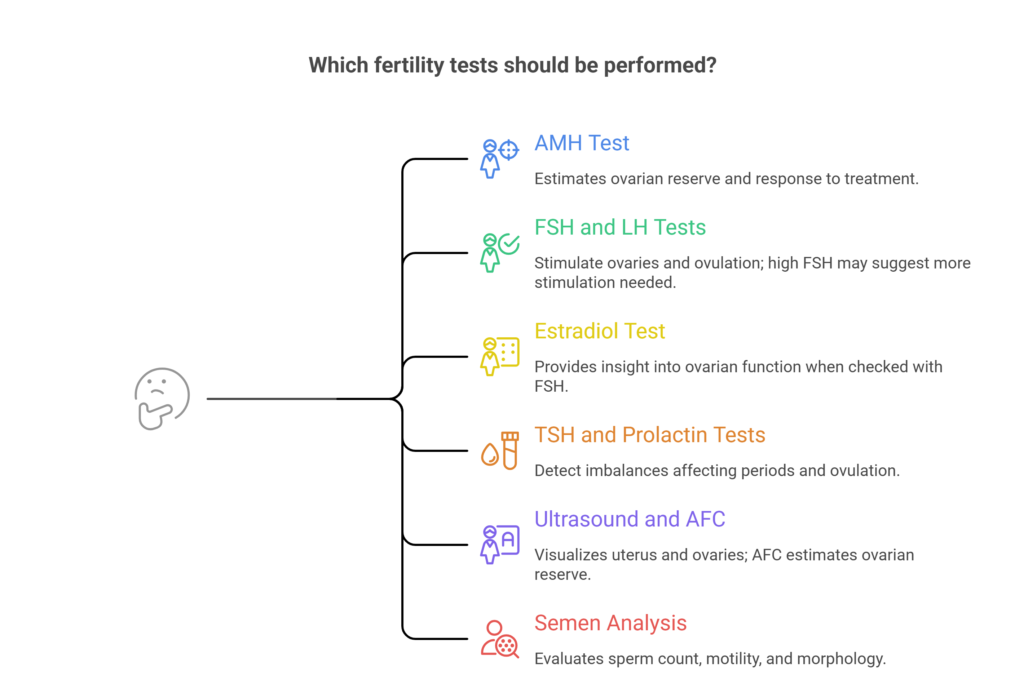
Most women start with a set of blood tests and an ultrasound. Here are some of the common fertility tests.
Anti-Müllerian Hormone (AMH)
AMH gives an idea about ovarian reserve, which means how many eggs are left. A low AMH does not mean you cannot get pregnant, and a high AMH does not guarantee easy conception. It only helps doctors estimate how your ovaries might respond to treatment and how to plan the next steps.
Follicle Stimulating Hormone (FSH) and Luteinizing Hormone (LH)
These hormones are usually checked on day two or three of your cycle. FSH helps stimulate the ovaries, and LH plays a role in ovulation. If FSH is higher than expected, it can suggest that the ovaries need more stimulation to work. This does not mean pregnancy is impossible; it simply helps guide treatment decisions.
Estradiol (E2)
Estradiol is a form of estrogen that is often checked along with FSH because the two values together give better insight into how the ovaries are functioning in that cycle.
Thyroid Stimulating Hormone (TSH) and Prolactin
Thyroid and prolactin levels can quietly affect periods and ovulation. Even small imbalances can interfere with regular cycles, which is why these tests are part of a basic fertility workup.
Ultrasound and Antral Follicle Count (AFC)
An ultrasound helps doctors look at the uterus and ovaries. The antral follicle count is a simple count of small follicles seen in the ovaries at the start of a cycle. Like AMH, this gives an idea about ovarian reserve, but it can vary from month to month.
Common Fertility Tests for Men and How to Read Them
For men, the main fertility test is a semen analysis. This report usually talks about three key things.
-
Count means how many sperm are present.
-
Motility means how well they move.
-
Morphology means how many have a normal shape.
Semen quality can fluctuate significantly based on recent illness, stress, a high fever in the weeks before the test, or even dehydration. Since sperm count is one of the most common concerns that shows up in a fertility test, you can also read our detailed guide on Low Sperm Count: Signs, Causes, and Treatment Options to understand what it means and what can be done about it.
What “Normal” and “Abnormal” Really Mean
One of the most stressful parts of reading a fertility test report is seeing values marked outside the reference range. They are statistical averages based on large populations, and being slightly outside the range does not mean that everything is wrong. Your fertility doctor will look at patterns, symptoms, medical history, age, and how long you have been trying to conceive.
What Your Results Can and Cannot Tell You
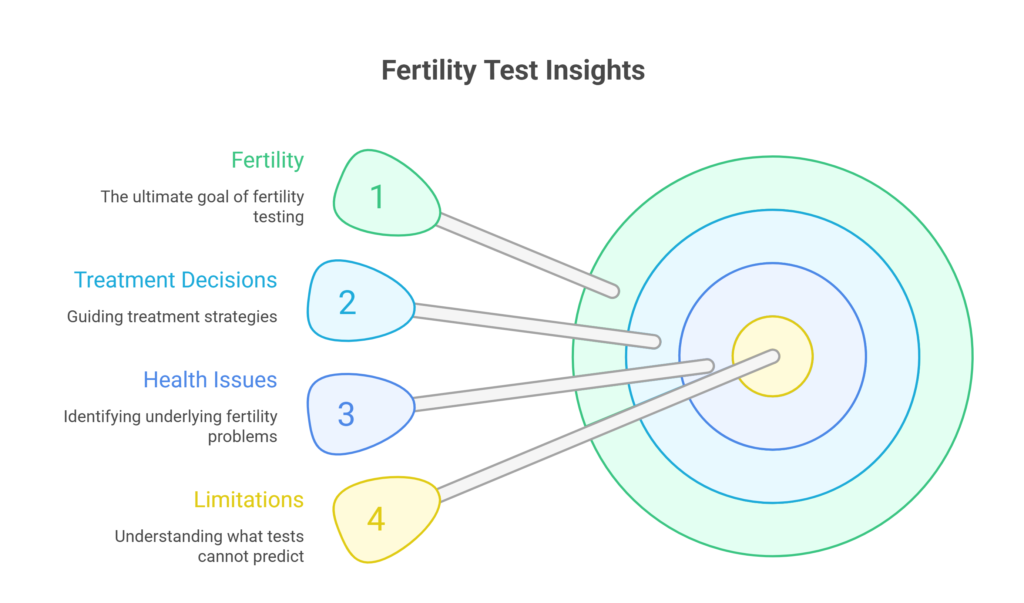
Fertility tests can help identify issues like ovulation problems, hormone imbalances, low ovarian reserve, or sperm-related concerns. They also help your doctor decide what kind of treatment makes sense and when to move forward.
What they cannot do is predict the exact moment you will conceive or guarantee any outcome. They also cannot measure things like emotional readiness, stress levels, or the many small factors that affect real-life fertility.
Common Mistakes People Make When Reading Reports
One of the biggest mistakes is comparing your numbers with someone else’s. Every person’s body is different, and every fertility journey is different. Another common mistake is assuming that a low or borderline value means there is no hope. In reality, many people conceive with numbers that are not perfect, sometimes with help and sometimes naturally.
How to Talk to Your Doctor
You can ask what each result means for you, what your options are, and whether you need repeat tests or further evaluation. It is completely okay to ask for an explanation in simple language. A good consultation should leave you feeling clearer, not more confused.
Fertility test results can feel overwhelming, but they are the beginning of a more informed and more personalised fertility plan. At London IVF, we take the time to sit with you, walk through your results properly, and help you understand what they mean for your specific journey. If you would like to review your results with us, book a consultation and let us help you take the next step with clarity.
