
Most people think that pregnancy will happen naturally when the time is right. And for many people, this is the way it happens. But for others, the journey takes longer, feels uncertain, and often comes with more questions than answers.
In fact, according to the National Health Service (NHS) UK, around 1 in 7 couples may have difficulty conceiving. Which means if you are feeling unsure or concerned, you are not alone in this.
If you are trying to get pregnant and not succeeding, then you might have a doubt- should we keep trying or consult a fertility doctor?
The truth is, knowing when to seek help can make a meaningful difference. A timely consultation with a fertility doctor is not about rushing the process. It is about understanding your body better and making informed decisions early on.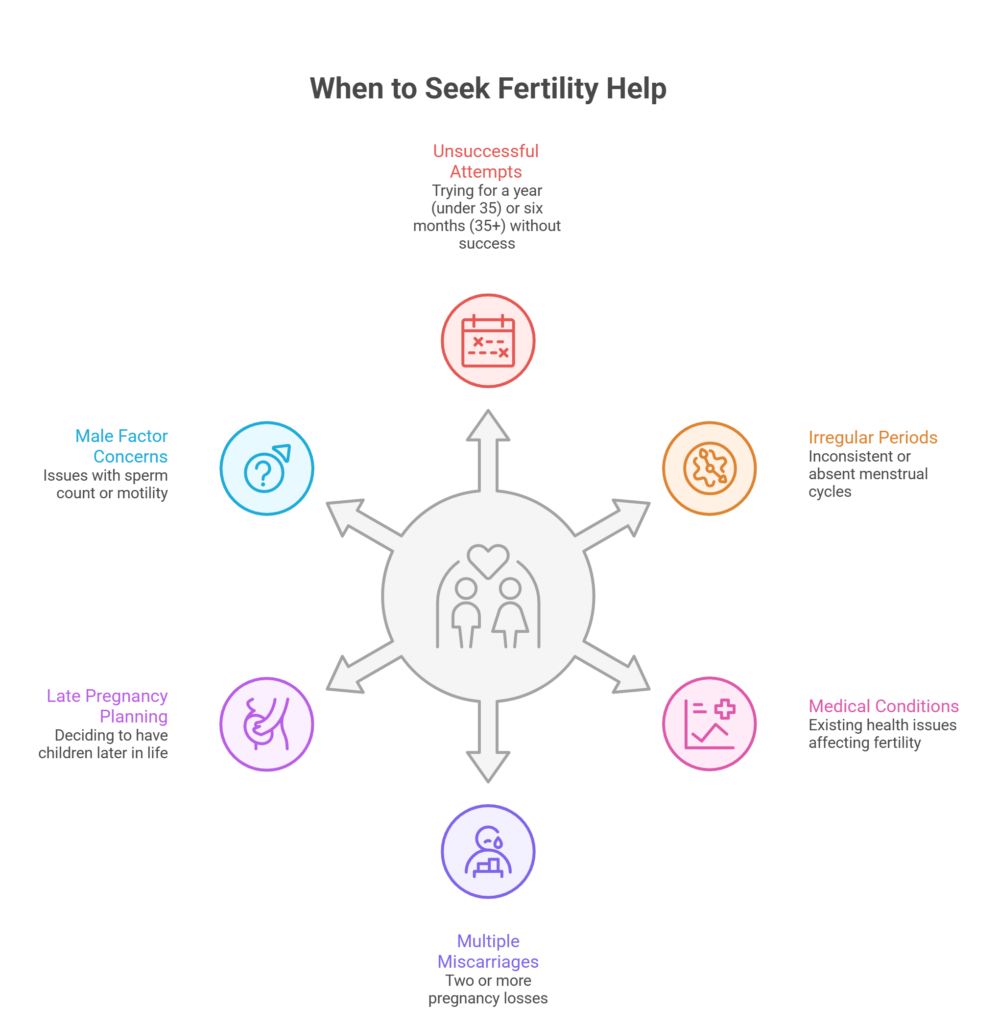
You Have Been Trying Without Success
The first and most obvious sign is that you have been trying for quite some time and are not getting a positive result. If you are under 35 and it has been a year of trying without a result, it is usually a good point to check in with a doctor. If you are 35 or older, that timeline tends to shorten to around six months.
This happens because fertility naturally declines with age, especially when it comes to egg quality and quantity. What may simply take a little longer in your late twenties can start to need support as you move into your mid to late thirties. Reaching this point does not necessarily mean something is wrong. It simply means it may be time to understand what could be happening more clearly.
Your Periods Are Irregular or Absent
Your menstrual cycle is often one of the most important indicators of your reproductive health. If your periods are highly irregular, very far apart, unusually heavy, or even absent, it could point to issues with ovulation. And without regular ovulation, getting pregnant can become more difficult.
Conditions like Polycystic Ovary Syndrome are a common reason behind irregular cycles, and hormonal imbalances also play a role in irregular periods. Many people ignore these signs for years, assuming it is just how their body functions. But if you are planning to get pregnant, you need to consult a fertility doctor and get these patterns checked at the earliest.
You Have Known Medical Conditions
Certain health conditions can directly or indirectly affect fertility. For example, Endometriosis can impact the reproductive organs and make conception more challenging. Thyroid disorders, diabetes, and other hormonal issues can also interfere with ovulation and implantation.
Even past pelvic infections or surgeries can sometimes lead to complications. If you already know you have any of these conditions, it is better not to take a wait-and-watch approach. Early guidance from a fertility doctor can help you understand your options and avoid unnecessary delays.
You Have Experienced Multiple Miscarriages
While a single miscarriage can be fairly common, having two or more may point to an underlying issue that needs attention. This could be linked to genetics, hormone levels, or structural concerns within the uterus.
Seeking help at this stage is about getting clarity and the right support, not overreacting. In many cases, understanding the cause can make a meaningful difference to your chances of a healthy pregnancy going forward.
You Are Planning Pregnancy Later in Life
More people today are choosing to start their families later, and that is completely understandable. At the same time, it does come with certain biological factors.
Fertility does decline with age, especially after 35. This does not mean pregnancy is not possible, but it may take longer or need a bit of medical support. Read more about getting pregnant after 35 here.
Speaking to a fertility doctor early can help you understand where you stand and what options you have. Treatments like In Vitro Fertilization(IVF) are often part of that conversation, not as a last resort, but as one of several possible paths.
Male Factor Concerns
Fertility is often seen as a woman’s health issue, but that is only part of the story, as male factors contribute to a significant share of infertility cases. Issues like low sperm count, poor motility, or past medical conditions can all play a role. Lifestyle habits such as smoking, alcohol use, and ongoing stress can also affect sperm health.
If there are any concerns on the male side, it helps to look into them early. Fertility involves both partners, and both need to be equally involved in the process.
When Not to Panic Yet
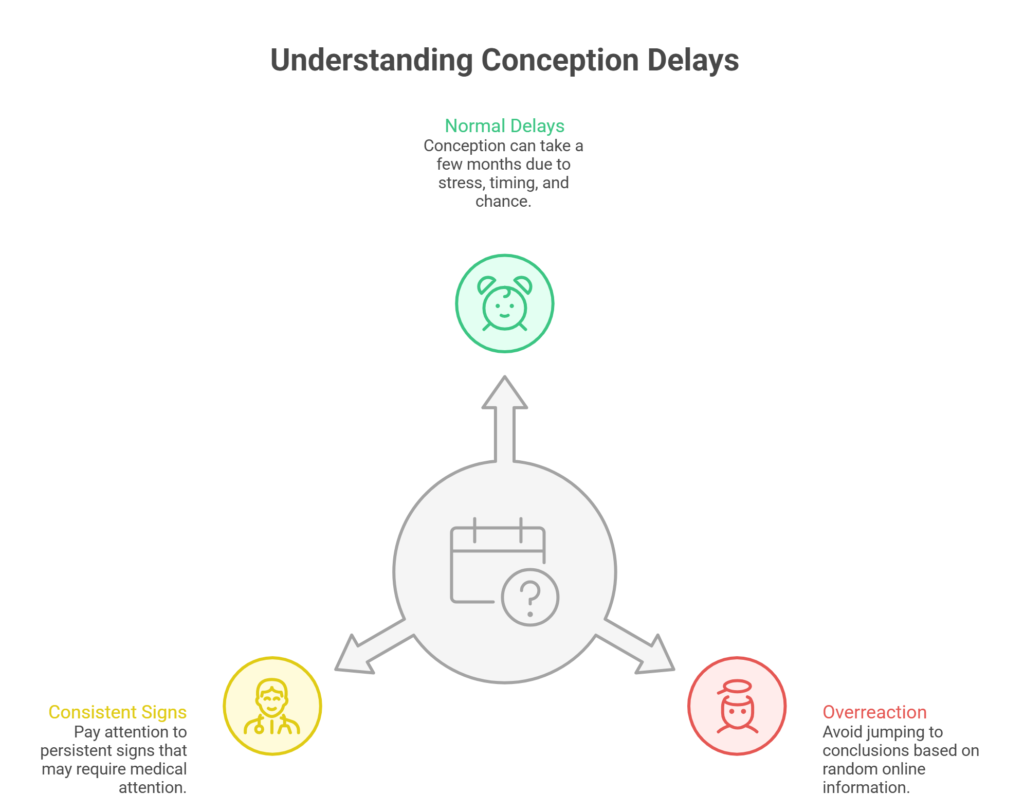
It is equally important to understand that not every delay points to a problem, especially if you have only recently started trying. It is completely normal for conception to take a few months, and factors like stress, timing, and even chance can all influence the process.
What really matters is finding a sense of balance, where you do not jump to conclusions based on random information online. At the same time, do not overlook consistent signs that may need attention.
Deciding to see a fertility doctor can feel like a big step. But it is not a sign of failure or something being “wrong.” In many cases, it is simply about getting the right guidance at the right time. The earlier you understand your body and your options, the more confident and informed your decisions can be.
If you have been waiting, wondering, or quietly worrying, it might be time to get some clarity. Reach out to London IVF Centre and take the next step with the right guidance and care.
