If you are trying to get pregnant and everything seems to be in place, the journey can still feel unexpectedly difficult. When your medical tests come back normal, and pregnancy still does not happen, the lack of a clear explanation can feel overwhelming. When there is no clear medical explanation, you might be told you have unexplained infertility, a term that can feel confusing and frustrating at the same time.
Unexplained infertility is more common than many people realise; in fact, research shows that about 30 percent of couples struggling to conceive are diagnosed with unexplained infertility.
What Does Unexplained Infertility Mean?
Unexplained infertility is diagnosed when standard fertility evaluations do not reveal an obvious reason for not being able to conceive. This usually means that ovulation appears regular, the fallopian tubes are open, the uterus looks normal, and semen analysis results fall within expected ranges.
It is important to understand that this diagnosis does not mean “nothing is wrong.” It simply means that current testing methods have not identified a clear issue. Fertility is complex, and not every factor can be measured with routine tests.
Why Pregnancy May Not Happen Even When Tests Are Normal
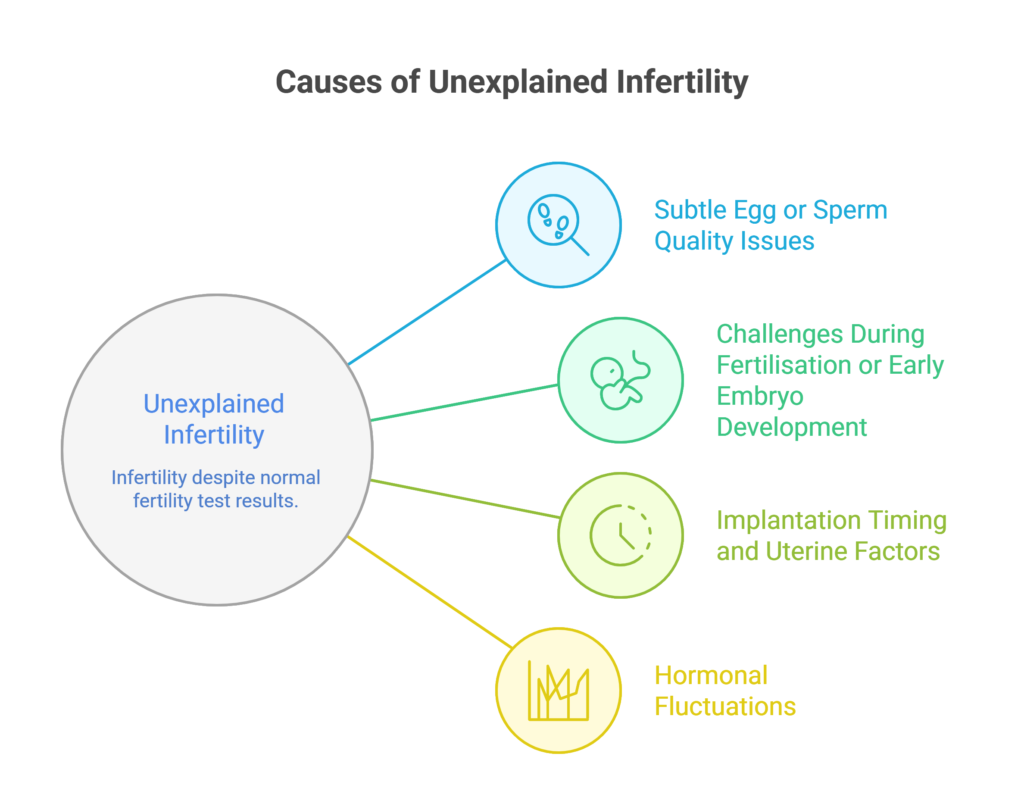
Just because the routine fertility tests turn out to be normal does not mean that everything is fine. There are other factors to consider as well, including:
Subtle Egg or Sperm Quality Issues
Standard fertility tests assess quantity and basic function, but they cannot always detect subtle quality concerns. Eggs and sperm may appear normal on routine testing, yet still have microscopic or genetic issues that affect fertilisation or embryo development.
Challenges During Fertilisation or Early Embryo Development
Even when ovulation and sperm parameters are normal, fertilisation may not always occur as expected. In some cases, fertilisation happens, but embryo development slows or stops before implantation. These early-stage challenges are difficult to detect because they occur before pregnancy can be confirmed.
Implantation Timing and Uterine Factors
For pregnancy to occur, a healthy embryo must implant into the uterine lining at precisely the right time. Small variations in uterine receptivity, blood flow, or lining development can affect this process.
Hormonal Fluctuations
Hormone levels naturally fluctuate from cycle to cycle. Even when hormone tests fall within normal ranges, small timing differences can affect ovulation quality or implantation. These subtle variations can contribute to unexplained infertility.
The Role of Age in Unexplained Infertility
As your age increases, unexplained infertility becomes more common. While tests may still appear normal, egg quality naturally declines over time. This can lead to fertilisation or implantation challenges that are not easily detected through routine evaluations.
This does not mean that you cannot get pregnant, it simply changes how fertility is assessed and how treatment plans are designed. Early evaluation and timely decision-making are important in such cases.
The Emotional Impact of an Unexplained Diagnosis
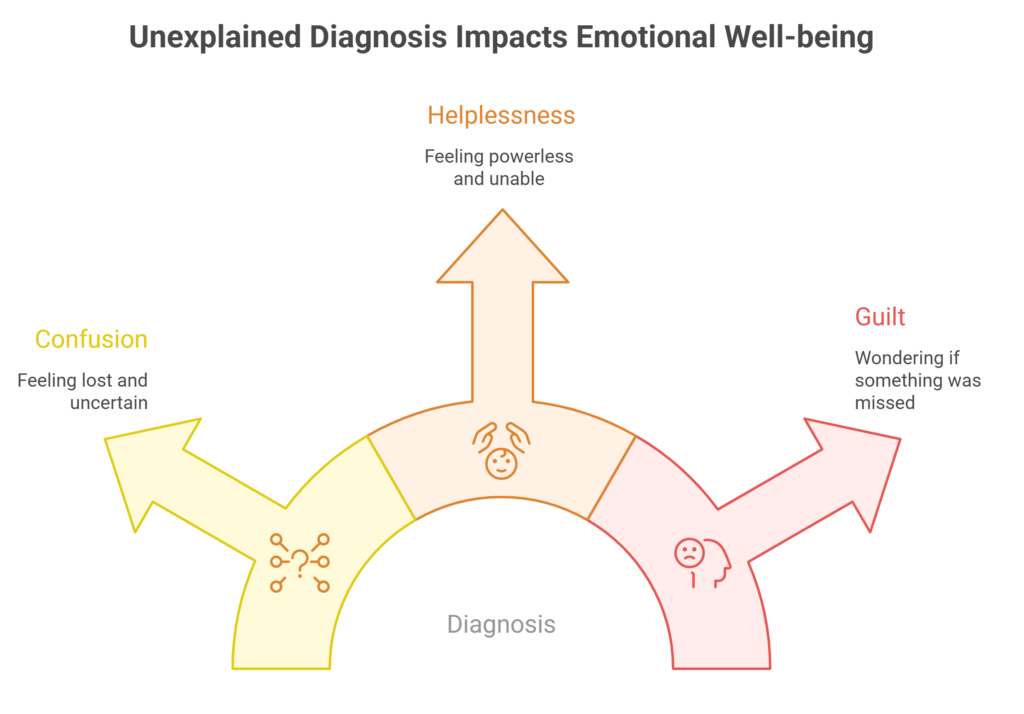
After months of trying and undergoing multiple medical tests, an unexplained diagnosis can be emotionally exhausting. You might feel confused, helpless, or even guilty, wondering if you have missed something or waited too long.
Fertility challenges affect not only the body but also mental and emotional well-being. Support from medical professionals, counsellors, and trusted loved ones can help you navigate this uncertainty with greater confidence.
What Are the Next Steps After a Diagnosis?
After diagnosing unexplained infertility, doctors usually review the complete fertility history rather than focusing on a single test result. This includes factors such as age, how long you have been trying, menstrual patterns, and any previous pregnancies or treatments. Treatment options vary based on individual situations. Some couples benefit from closer cycle monitoring to optimise timing, while others might need more advanced support.
If you want a clearer picture of how fertility care is planned, this step-by-step IVF treatment guide from consultation to conception can help explain what the process typically looks like.
Why Personalised Care Is Important in Unexplained Infertility
There is no single approach that works for every case of unexplained infertility. What works for one couple may not be suitable for another. Your age, how long you’ve been trying, your medical history, and how you respond to initial interventions all shape the next steps.
This is where specialist fertility clinics like London IVF Centre make a real difference. They can identify subtle patterns that general practitioners might miss and adjust treatment approaches based on how your body responds.
When to Seek Further Guidance
If pregnancy has not occurred after a reasonable period of trying, or if uncertainty is causing significant stress, seeking guidance from a fertility specialist can be helpful. Even when previous tests appear normal, a fresh evaluation or second opinion may provide new insight.
Time does play a role in fertility, so delaying decisions for too long may not always be helpful. At the same time, it is just as important not to rush into treatments you do not fully understand or feel ready for.
Many couples diagnosed with unexplained fertility go on to conceive with the right guidance and support. With a thoughtful, personalised approach and clear communication, you can take the next steps without feeling rushed or overwhelmed.
Understanding unexplained infertility can feel overwhelming. At London IVF Centre, our specialists take time to listen, explain your options, and support you with a personalised care plan based on your needs. Book a consultation to discuss your options in detail.
